
As February 2026 approaches, many American households are watching reports of a proposed $2,000 federal direct deposit aimed at providing temporary financial relief. Rising costs for food, housing, and utilities have intensified budget pressures, prompting discussions of targeted assistance similar to past federal relief efforts. While media coverage has generated excitement, understanding the eligibility criteria, payment timeline, and verification process is essential before making financial plans.
Why a February Payment Is Being Discussed
Early in the year, households typically face higher expenses such as utility bills, insurance renewals, and tax preparation costs. Inflation over recent years has further strained household budgets. In this context, a mid-winter federal deposit could offer short-term liquidity for families managing these pressures.

Past stimulus and relief programs illustrate the intent behind such payments: to boost household spending while easing immediate financial burdens. However, any 2026 payment remains contingent on congressional authorization and formal agency notification. Payments are not automatic without legislative approval.
Who May Qualify
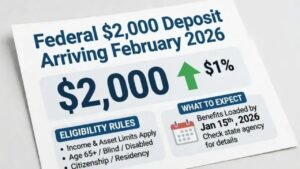
Eligibility is expected to follow structured guidelines, reflecting past federal relief measures. Likely recipients include:
- Social Security retirement beneficiaries
- Supplemental Security Income (SSI) recipients
- Social Security Disability Insurance (SSDI) recipients
- Certain veterans receiving federal benefits
- Low- to middle-income taxpayers
Income thresholds will likely determine the full or partial payment amount. Households with higher earnings may receive reduced payments or none at all. Joint filers, households with dependents, and beneficiaries with recent income changes should monitor official IRS announcements to confirm eligibility.
Payment Distribution and Timeline

The February 2026 payment is expected to be distributed in phases to ensure administrative accuracy and minimize delays:
- Direct deposits first: Individuals with bank accounts on file with the IRS will likely receive funds first, often within days of release.
- Paper checks or prepaid debit cards: Those without direct deposit information may receive mailed payments later in the month.
- Staged process: This approach mirrors previous federal disbursements, helping manage transaction volumes and reduce the risk of errors or fraud.
Exact dates will only be confirmed following official notification. Delays can occur due to mismatched account information, unprocessed tax returns, or address discrepancies.
Preparing for the Deposit
Households can take proactive steps to reduce delays and ensure receipt:
- Update banking and mailing information: Correct account numbers and addresses prevent returned or delayed payments.
- Verify tax filings: Accurate 2024 tax returns, including dependent claims, are likely to serve as the primary verification source.
- Monitor official portals: The IRS typically activates online tracking tools when payments begin. Avoid relying on third-party websites or social media updates.
Financial planners stress that keeping records accurate and current often determines whether funds are received promptly or experience delays.
Using the Funds Wisely
A one-time $2,000 deposit can help households manage immediate financial obligations:
- Retirees: Prescription refills, groceries, or utility bills.
- Working families: Rent, mortgage payments, or essential household expenses.
- Debt management: Reducing high-interest credit card balances to ease monthly cash flow.
Experts recommend dividing the funds between urgent expenses and emergency savings to stabilize finances while avoiding reliance on temporary payments for long-term needs.
Taxability and Application Notes
Historically, federal stimulus payments were not taxable income, but recipients should follow official IRS guidance once the 2026 payment rules are confirmed. Most eligible individuals in past programs did not need to submit separate applications, as payments were processed automatically using federal benefit records or tax filings. However, those with updated bank accounts, changed addresses, or unfiled returns may need to update information to avoid delays.
Points of Caution
Until legislation is enacted and agency notifications are issued, all details regarding the $2,000 payment remain tentative. Income limits, eligibility categories, and distribution schedules could be revised.
Households should also recognize that one-time payments are temporary financial support and do not replace long-term income solutions. Policymakers typically design these measures as short-term economic relief tools rather than permanent benefit expansions.
Key Takeaways
- The proposed $2,000 direct deposit is designed to provide temporary financial relief for eligible households.
- Eligibility likely depends on income, benefit participation, and updated IRS records.
- Payments are expected to be issued in phases: direct deposits first, followed by mailed checks or prepaid cards.
- Accurate tax and banking information is critical for timely receipt.
- The payment is one-time support; planning should consider that it does not represent recurring income.
While the February 2026 deposit has the potential to ease short-term financial pressures, households should rely on official IRS guidance and secure portals for verification, rather than social media or third-party reports. Staying proactive and organized ensures that eligible recipients can access the funds efficiently and use them effectively to meet immediate financial needs.