A one-time $2,000 federal direct deposit slated for February 2026 has sparked considerable attention among taxpayers and benefit recipients. Reports suggest the payment aims to support low- and moderate-income households amid ongoing cost-of-living pressures. However, officials emphasize that eligibility will be structured, meaning not every adult or family will automatically receive the funds.
Understanding how qualification is determined, when payments will be processed, and the precautions recipients should take is essential for planning ahead.
Who May Qualify for the February 2026 Payment

Eligibility is expected to depend on several factors: income levels, household size, participation in federal benefit programs, and tax compliance.
- Income thresholds: Individuals or households above certain income levels may receive a reduced payment or may not qualify at all. The payment likely phases out gradually for higher earners, similar to previous relief programs.
- Benefit participation: Recipients of Social Security retirement benefits, Supplemental Security Income (SSI), or certain veterans’ benefits may automatically qualify if their records align with program guidelines. Changes in income or household composition may affect automatic eligibility.
- Tax compliance: Agencies typically rely on the most recent tax return, which for the 2026 deposit will likely be the 2024 filings, to confirm income and dependents. Accurate and timely filings can reduce processing delays.
Verification through official government portals is recommended, as assumptions based on prior payments or third-party sources may not be reliable.
How the Payment Will Be Distributed
Officials indicate a phased rollout throughout February 2026 rather than a single nationwide release. Key points include:
- Direct deposits first: Recipients enrolled in electronic payment systems are expected to receive funds initially. This ensures faster distribution and reduces processing errors.
- Paper checks and prepaid debit cards: Mailed payments are likely to follow, with delivery potentially taking several weeks after the initial electronic disbursement.
- Staggered timing: A similar approach was used during the 2020–2021 federal stimulus distributions, where electronic transfers reached households faster than mailed options.
Preparing for the Deposit

To ensure smooth receipt of the $2,000 payment, households should take proactive steps:
- Update bank and mailing information: Outdated account details or addresses can delay or prevent receipt of funds.
- Verify tax and benefit records: Confirming that 2024 tax filings and benefit participation are accurate reduces the likelihood of verification issues.
- Plan cautiously: While the payment may help cover rent, groceries, utilities, or medical expenses, it is not recurring. Avoid overreliance until funds are confirmed.
Fraud Awareness and Safe Verification
Large federal payments can attract scam attempts. Key safety guidelines include:
- Official agencies do not request fees or banking passwords to release payments.
- Treat any unsolicited message claiming payment activation or verification as suspicious.
- Check official portals for status updates rather than responding to emails or phone calls from unknown sources.
If a direct deposit fails, a trace or reissue process may apply, but processing speed can vary based on agency workloads. Acting promptly and using secure channels can help resolve issues efficiently.
Financial Impact and Household Planning
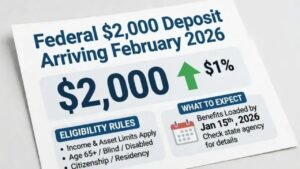
For many households, the $2,000 deposit could provide temporary relief against immediate expenses, such as overdue bills or emergency savings. Financial planners advise using the payment strategically, considering that it is a one-time, non-recurring benefit.
Examples of potential uses include:
- Covering a portion of monthly rent or mortgage.
- Paying for utilities, groceries, or prescription costs.
- Building or replenishing an emergency fund.
Proper planning is particularly important for households with tight budgets, as any delay or mismatch in records could disrupt anticipated cash flow.
Why This Payment Matters in 2026
Rising costs for housing, healthcare, and everyday essentials have put pressure on household budgets. Unlike universal stimulus rounds seen during the pandemic, the February 2026 $2,000 deposit appears targeted, focusing on those most affected by inflationary trends.
The initiative is conditional rather than universal, designed as a calibrated support measure rather than a broad economic stimulus. Outcomes will depend heavily on accurate records, eligibility verification, and timely filing compliance.
Documentation and Record-Keeping
Recipients are encouraged to retain copies of:
- Tax returns and dependent claims.
- Official communications regarding the February 2026 payment.
- Digital confirmations from government portals.
Maintaining thorough records can expedite resolution in case of payment discrepancies or verification requests, a lesson reinforced by prior federal disbursements.
Key Takeaways
- The $2,000 federal direct deposit is a one-time payment aimed at low- and moderate-income households.
- Eligibility depends on income, household size, benefit participation, and tax records.
- Payments will be issued in phases: direct deposits first, followed by paper checks or prepaid cards.
- Keeping personal information up-to-date and monitoring official portals is crucial for timely receipt.
- While helpful, the payment is temporary support and should be incorporated cautiously into financial planning.
The February 2026 deposit reflects a targeted, strategic approach to household support amid ongoing economic pressures. By preparing records, verifying eligibility, and staying vigilant against scams, eligible recipients can maximize the benefits of this federal initiative while minimizing potential issues.